Your Tax Strategy Saved You $7,000. Now What?
 Certified CFO
Tax savings create opportunities. Intentional decisions create results.
Congratulations! Your tax strategy saved your business approximately $7,000 this year. That's great news. But here's the question that matters more:
Where did that $7,000 go?
Did it disappear into everyday spending? Did it strengthen your financial position? Or did you put it to work building your future? Saving money on taxes isn't the finish line. It's the starting point.
Same Savings. Three Very Different Decisions.
1. Spend It
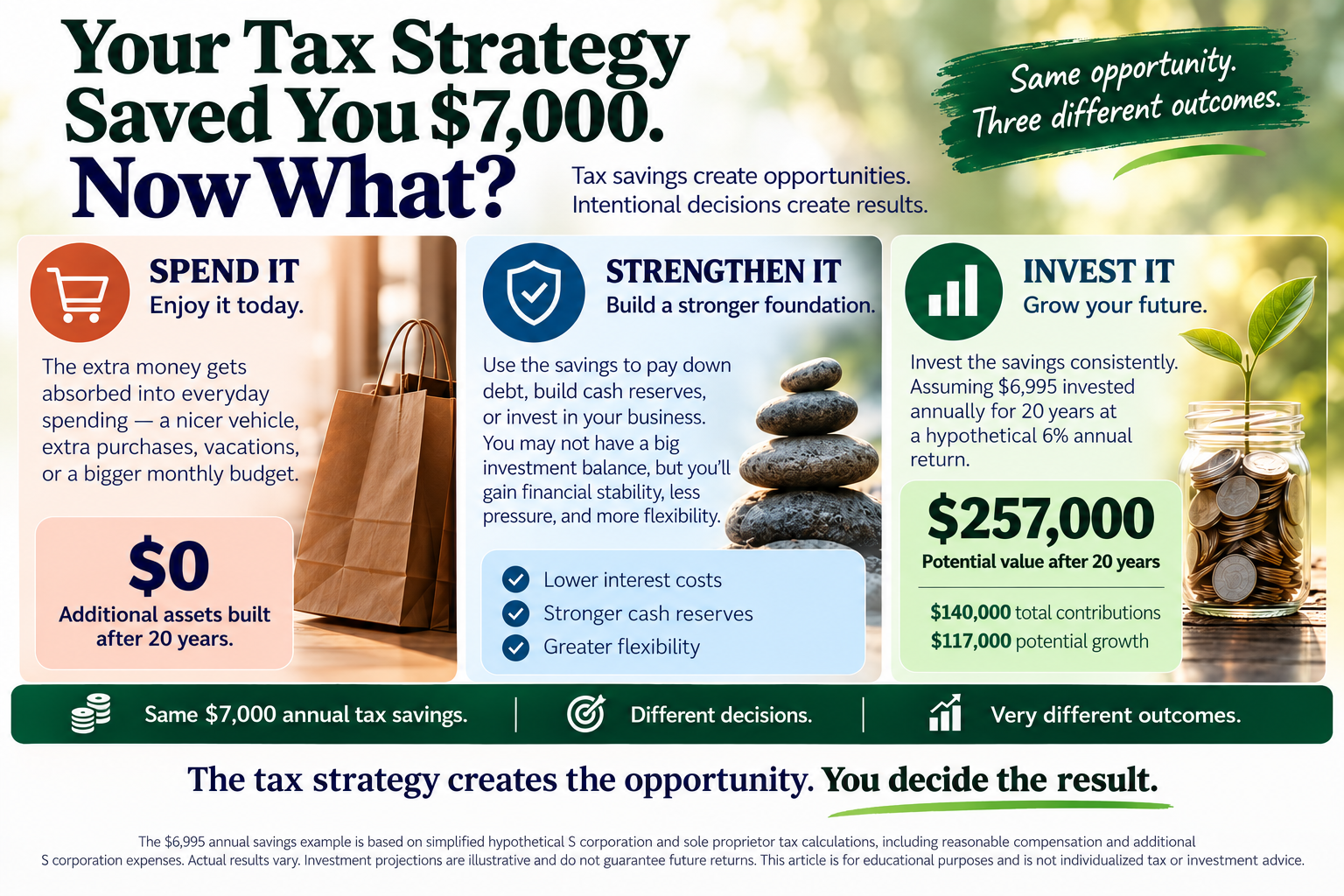
The extra cash gradually becomes part of everyday spending: a nicer vehicle, extra purchases, or a larger monthly budget. There's nothing wrong with enjoying the rewards of your work. But after 20 years, roughly $140,000 in extra cash could be spent without intentionally building a financial asset from those savings.
The tax strategy worked. But did it move the owner closer to their goals?
2. Strengthen It
This owner uses the savings to pay down high-interest debt, build cash reserves, or make their business less dependent on borrowing. There may be no flashy investment balance, but there's less financial pressure, more flexibility, and greater control.
Sometimes the most valuable result is the financial burden you eliminate.
3. Invest It
This owner invests approximately $6,995 each year. At a hypothetical 6% annual return over 20 years, with contributions at each year-end and growth reinvested, the account could reach approximately $257,000.
That's about $140,000 contributed and $117,000 in potential growth.
Actual returns will vary; this illustration excludes investment fees and taxes.
The Decision Is Bigger Than Retirement
Investing isn't automatically the best choice for every business owner. Maybe your business needs a stronger reserve. Maybe eliminating debt will free up cash flow. Maybe better systems could help you work fewer hours without sacrificing profitability.
The right decision depends on what you want your money to accomplish.
A Tax Strategy Without a Plan Is Incomplete
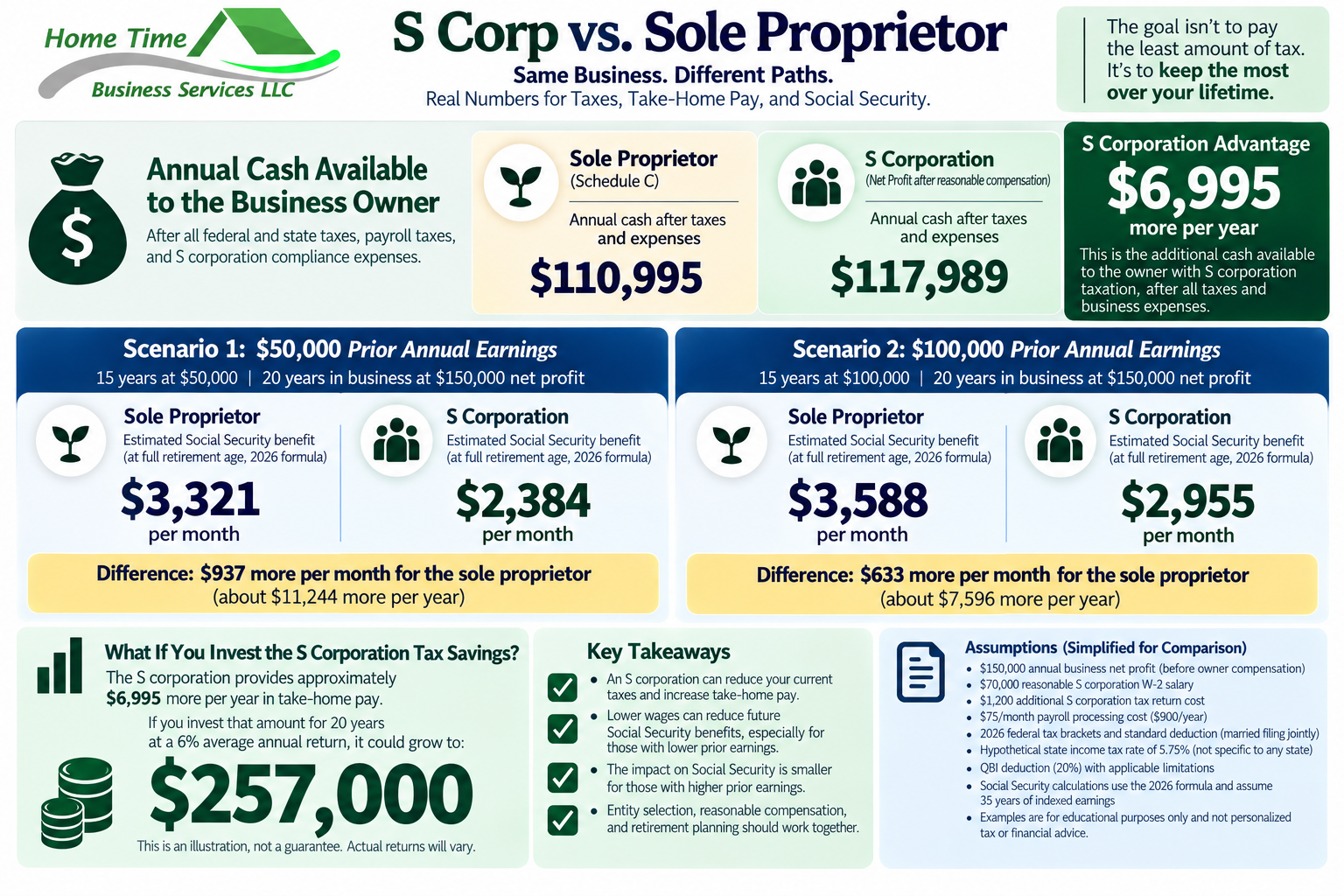
In our earlier article, S Corp vs. Sole Proprietor: Are You Saving on Taxes Today but Sacrificing Social Security Tomorrow?, we discussed how reducing payroll taxes can also affect future Social Security benefits.
If you save taxes through an appropriate S corporation structure but spend every dollar of that advantage, you could enter retirement with lower Social Security benefits and no extra retirement assets from those savings. The structure isn't necessarily the problem. The missing piece is a plan.
Give Your Tax Savings a Job
- **What did I save?** Know the actual amount after all relevant taxes and costs.
- **What matters most right now?** Cash reserves, debt, retirement, business improvements, or another priority?
- **What will I do with the money?** Decide intentionally before it disappears into routine spending.
Make Your Money Work for You
At Home Time Business Services, we believe business owners deserve more than a tax return that describes last year. They deserve information that helps them make better decisions about what happens next.
More control. More freedom. More time.
Money is a tool. Its value comes from what you choose to do with it.
Ready to make more intentional financial decisions for your business? Schedule a Right Fit Call.
Educational disclaimer: The approximately $6,995 savings is a hypothetical comparison with simplified tax assumptions, not a guaranteed S corporation benefit. Actual results depend on business facts, reasonable compensation, applicable tax laws, and costs. The 6% return and $257,000 future value are illustrative; investment returns are not guaranteed. This article is not individualized tax, legal, or investment advice.
Tags: